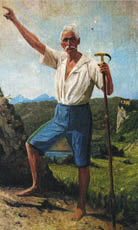
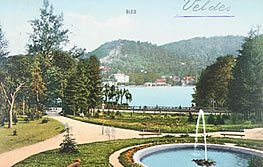
The beginnings of intensive tourism date from 1855 when the Swiss doctor Arnold Rikli was among the first to recognize the value and advantages of Bled’s climate and location, which gave it an extended bathing season. He founded a Natural Health Institute and introduced his own healing methods. If he were to attract visitors, he would need baths, footpaths and accommodation facilities.
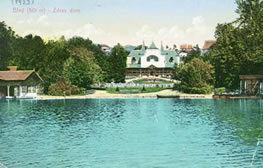
Opposite what is today the Park Hotel, Rikli ordered the construction of a simple wooden bath in the Swiss style, together with his Health Institute, which comprised a ‘practice’, a kitchen, a dining room and administrative space in 1895. Huts were built below the chestnut park to accommodate his patients. Due to growing demand, a larger bath was constructed in 1899. His healing methods included bathing in both the lake and baths. For the latter, two sources of water were used, having temperatures of 10 and 15.6° C respectively. Additionally, sunbathing as well as warm and steam baths were recommended. Rikli also devised walking routes in Bled and the surrounding area with various degrees of difficulty, which were used separately by men and women. Areas were set aside in these places for bowling and skittles. Rikli established strict regimes for his patients, which had to be adhered to.
In total, Rikli spent 52 years in Bled. In this time, he was one of the best-known natural healers, using atmospheric remedies. His therapies were effective against many illnesses, including rheumatism, migraines, insomnia, hysteria, anemia, circulatory disorders and weight problems. In addition to Rikli’s patients there were growing numbers of visitors who wished to spend their holidays in a healthy and above all beautiful environment. After 1870, with the construction of the railway line between Tarvisio and Ljubljana, a railway station opened at Lesce, further adding to the numbers of visitors. Bled was awarded a gold medal at a major international exhibition of health resorts in Vienna in 1903, while in 1906 it was included on the list of important tourist destinations in the Austro-Hungarian Empire.