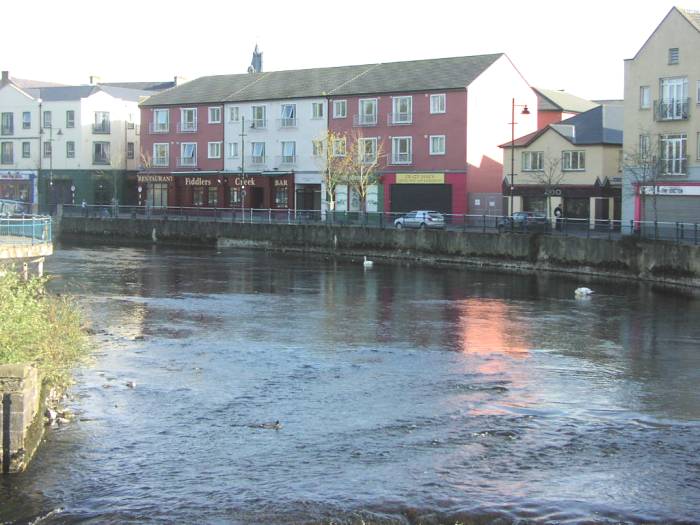
 River Sligo in middle of town |
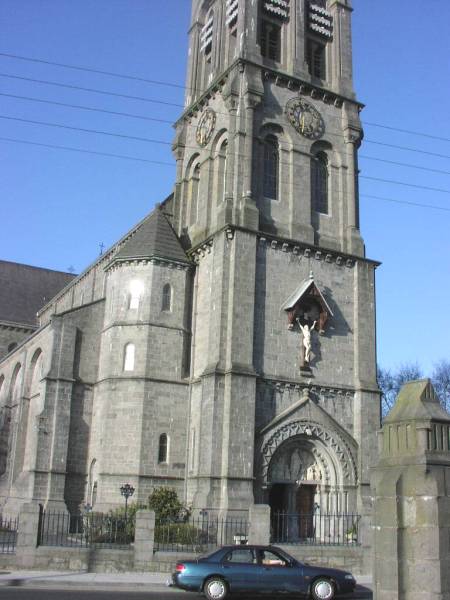 |
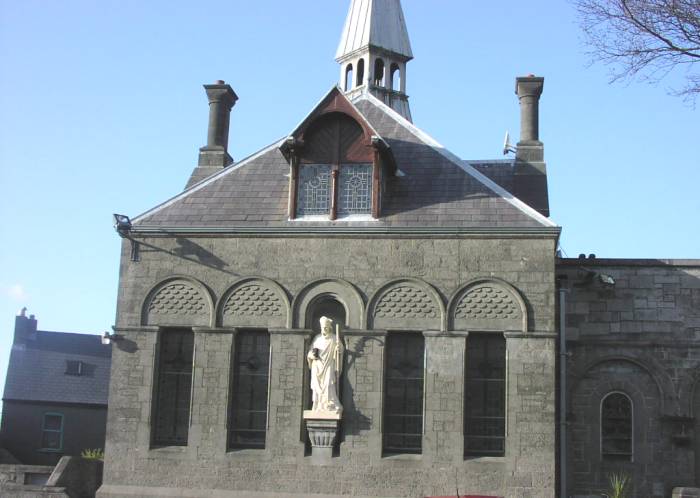 Local parish church |
 Main altar |
Sligo
River Sligo in middle of town |
|
Local parish church |
Main altar |
County Sligo is one of the most engaging counties in Ireland. Within a small area County Sligo has a fine variety of mountain, lake and coastal scenery. In the west of the county the Ox mountains form a background to the coastal plain, while north of Sligo town the landscape is dominated by steep-sided and flat-topped limestone hills. The coast is main low-lying and is fringed by sandy beaches and low cliffs.
Sligo is a county in the Connacht province of Ireland, on the Atlantic Ocean. Owned by the MacDermott family until the 12th century, Sligo was subsequently under the rule of the DeBurgos, O'Donnells, and O'Dowds before being chartered as a county in 1579. The painter Jack Butler Yeats and his brother, poet William Butler Yeats, spent much time in Sligo as youths. The wonderful landscape that has become known as "Yeats Country" because of the poets deep connection with Sligo. Yeats' gravestone in Drumcliff bears the self penned epitaph "Cast a cold eye on life, on death. Horseman pass by."
The town of Sligo is a seaport and commercial center. Just outside the town is Lough Gill, Yeats "Lake Isle of Innisfree." Among the prehistoric sites in the area are Maeve's Mound, a huge cairn at Knocknarea, and megaliths at Carrowmore. Sligo's history dates from the mid-13th century with construction of a castle and the 13th-century Sligo Abbey. The abbey was destroyed in 1641 when the town was sacked but now has restored cloisters.
