|
"The
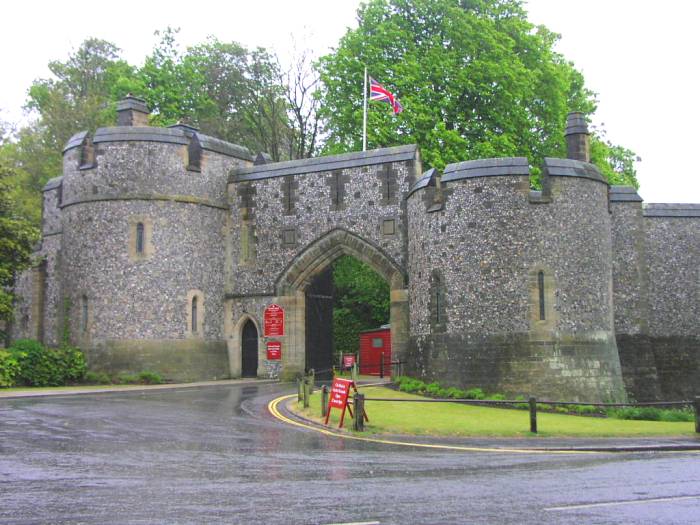
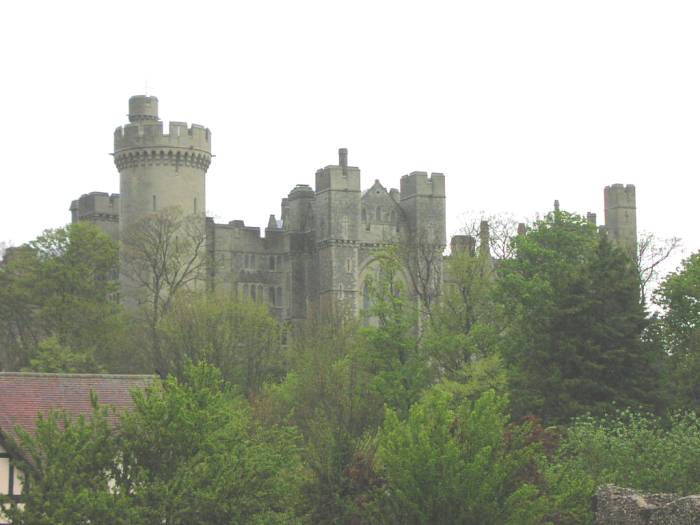
building of Arundel, a motte and double bailey castle like Windsor, was
started by Roger de Montgomery in the 1070s. Roger was one of
William the Conqueror's most trusted lieutenants, and he received the
western half of Sussex as well as large estates in Shropshire and North
Wales. He raised the motte and built the inner gatehouse, but most
of the other remaining medieval parts of the Castle were built in the
twelfth and thirteenth centuries. The shell keep with its
magnificent (now closed up) Norman doorway was the work of William, the
1st Earl of Arundel of the Albini family in 1138, and his successors
built the Well Tower and St Martin's Tower on the motte and lined the
lower quadrangle with domestic buildings which have all now disappeared,
although large parts of the outer castle walls remain.
In the mid-thirteenth century the Castle and the Earldom of Arundel
passed by descent to the Fitzalan family from Shropshire, and for three
hundred years it was their principal home although little remains of
their work on it except the Barbican, the Caernarvon windows in the
Well-Tower and Bevis Tower in the Upper Bailey. In 1580 the last
Fitzalan Earl died and the Castle passed (by marriage of his daughter
Mary to the 4th Duke) to the Dukes of Norfolk.
After the damage caused by the Civil War siege in 1643-4 and the
slighting in 1653, the Castle was not lived in by the family until the
late eighteenth century when the 11th Duke rebuilt it in Regency Gothic
style. The design was his, and the work was done by craftsmen from
his Cumberland estate whom he had specially trained in London; the
library, built entirely from Honduras mahogany and carved by Jonathan
Ritson and his son, remains as a fitting survivor of his work, but the
rest was swept away in the even more comprehensive rebuilding done by
Henry, 15th Duke, between 1875 and 1904. This was designed by C A
Buckler in a more severe, early English style and presents in all its
details a wonderful example of Victorian craftsmanship. The private
chapel with its fine stone carving and stained glass windows, the
Barons' Hall with its impressive hammerbeam roof and heraldic
decorations, and the Grand Staircase with its newel posts crowned by
heraldic beasts are among Duke Henry's finest interiors. In recent
years, much restoration and redecoration has been undertaken in the
family rooms and bedrooms, and the contents enhanced with furniture and
pictures formerly at Norfolk House in London."
Main page |